
Make Product Decisions backed by Real User Evidence
Stop shipping on assumptions. UXArmy helps product managers validate concepts before they’re built, test usability before they ship, and prioritize roadmaps with feedback from real users without needing a dedicated research team.
Trusted by product teams at









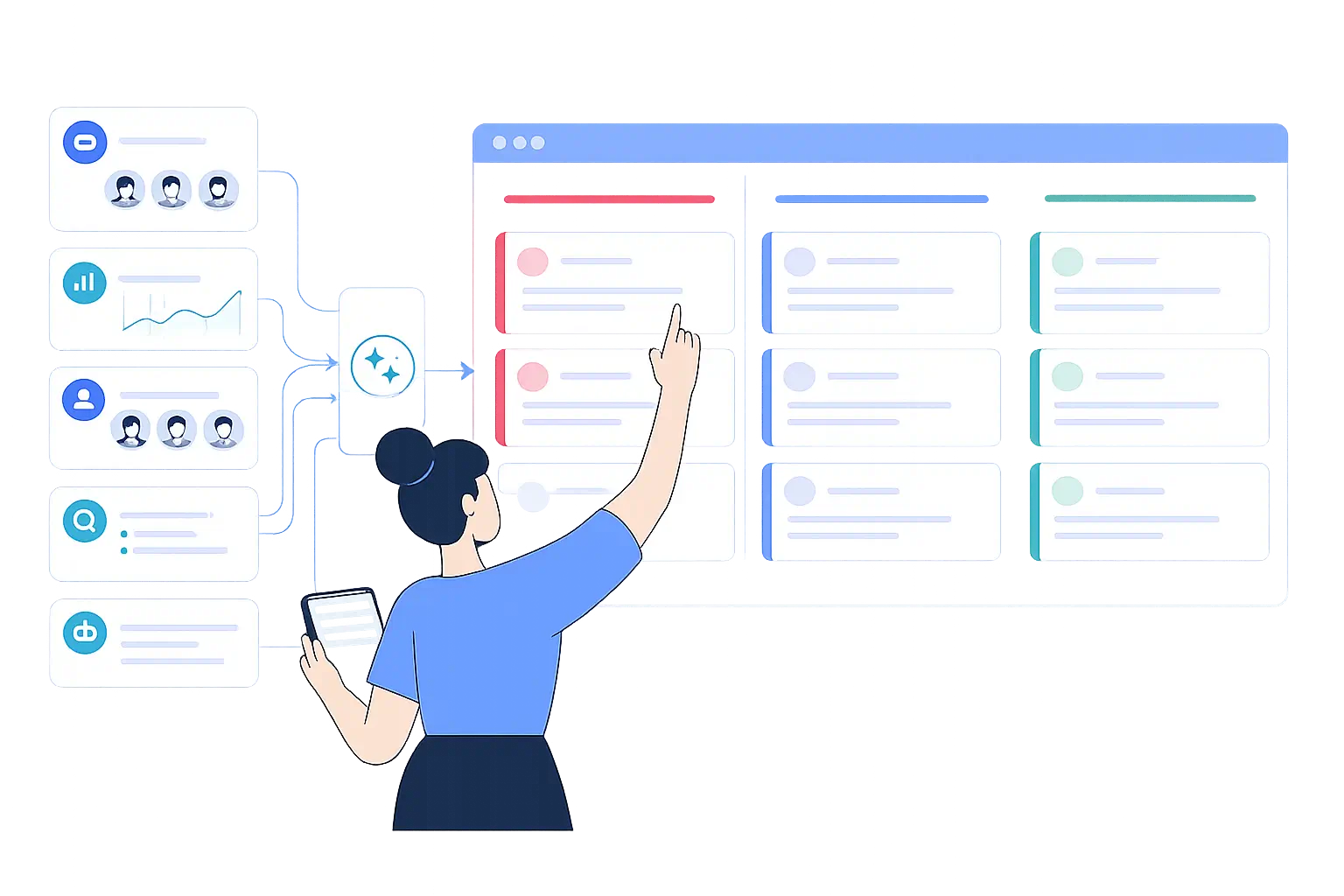
Ship with evidence. Not with fingers crossed.
You know your usage metrics. You know your funnel drop-off. You know what’s in the backlog. What most product teams don’t know until it’s too late is whether the thing they’re about to build is the thing users actually want, or whether the flow they just shipped is the one users can actually use.
The product teams that ship consistently well are the ones that build a habit of checking with real users before the build, before the launch, and after not just when something has already gone wrong. That kind of continuous research used to require a dedicated researcher and weeks of lead time. UXArmy was built to change that.
Research-grade rigor. Startup-speed turnaround
UXArmy's platform and research team bring the same methods enterprise product orgs use usability testing, concept testing, tree testing, card sorting but built for a PM who needs results in days, not a research team that needs weeks to scope a study. That's what lets a two-person product team validate like a company ten times its size.
Four Questions UXArmy Helps You Answer
Every roadmap has decisions you can’t make from analytics alone.
Decision 1: Is this even worth building?
Every roadmap has ideas that sound good in a planning meeting. Most of them haven't been checked against a single real user. Building the wrong thing doesn't just waste a sprint. It costs the opportunity cost of everything else that sprint could have shipped instead. Most product teams have a rough sense of what users want. Almost none of them systematically test a concept with real users before committing engineering time.
UXArmy puts your idea, feature concept, or early wireframe in front of real target users before a single line of production code is written. You find out how appealing it is, whether it solves a problem people actually have, and how it compares to what they use today. The result: a ranked, evidence-backed case for what to build next, before you've spent the sprint finding out the hard way.
What you get:
- Ranked appeal and purchase/adoption-intent scores across concepts.
- The qualitative reasoning behind the numbers: what users like, what confuses them, what's missing.
- A clear recommendation on which concept to build, refine, or drop.
Decision 2: Will people actually be able to use this?
A feature can be technically complete and still fail, because users can't find it, don't understand it, or give up halfway through the flow. Usability problems are cheap to fix before launch and expensive to fix after, in support tickets, churn, and a redesign nobody budgeted for.
UXArmy runs unmoderated usability tests on prototypes or live products, with screen recordings, task completion rates, and AI-summarized reports, plus moderated sessions when you need to dig into the why. Test flows before you ship, and re-test after each iteration to confirm the fix actually worked.
What you get:
- Task completion and time-on-task data.
- Screen recordings and heatmaps showing exactly where users struggle.
- AI-generated summaries so you don't have to watch every session.
- A before/after read on whether your fix worked.
Decision 3: What should actually be at the top of the roadmap?
Every stakeholder has an opinion about what should ship next. Sales wants the enterprise feature. Support wants the bug fixes. Leadership wants the flashy redesign. Without user evidence, prioritization becomes a negotiation between the loudest voices in the room, not a decision grounded in what actually moves the product forward.
UXArmy gives you the tools to check feature demand, information architecture, and navigation decisions directly with users. Surveys to gauge interest and pain points at scale, card sorting to see how users naturally group features, and tree testing to confirm your structure actually makes sense to them.
What you get:
- Feature-demand and pain-point data you can bring into planning.
- A clear picture of how users mentally organize your product.
- Evidence you can point to when a roadmap decision gets challenged.
Decision 4: Did it actually work?
You shipped it. The dashboard shows usage numbers. But numbers tell you what happened, not why, and not whether users are quietly frustrated with something that's technically 'working'. Nearly all failed features looked fine on a usage chart right up until adoption stalled.
UXArmy runs usability and sentiment testing on your live website or app after launch, so you know not just that a feature is being used, but whether it's actually landing the way you intended, and what's quietly getting in the way of full adoption.
What you get:
- Real-user sentiment and friction data on live features.
- Screen recordings showing actual in-product behaviour, not just aggregate metrics.
- Early warning on adoption problems before they show up as churn.
Research Quality you’d expect from a Large Agency. Without the large Price tag.
The research rigor of a dedicated team. Without needing to hire one.
Traditional research setups assume a company has a UX researcher, a multi-week research cycle, and a roadmap that can wait for both. Most product teams don’t have any of that and shouldn’t have to, just to make an evidence-based call.
Self-serve or fully managed your choice
Run studies yourself with UXArmy’s platform templates, AI-assisted reporting, and built-in participant recruitment mean no research background required. Or hand it off entirely to UXArmy’s Expert Services / Managed ResearchOps team and get a fully run study back, brief to report.
Local-language testing globally
Testing and feedback in several languages be it Japanese, Thai, Hindi, Arabic, Turkish, French, Spanish or any other. We know the users you’re building for don’t all think in English. This matters most for teams delivering for global markets and is a real life-saver compared to off-the-shelf tools.
Results in days, not weeks
Most usability tests and surveys return actionable results within 24 to 48 hours. You get usability findings while the Sprint they’re informing is still in progress, not after the product shipping deadline has crossed.
Researchers who've worked inside product teams. And a platform built for rapid turnaround.
UXArmy combines experienced UX researchers with a proprietary platform that runs usability tests, surveys, and participant panels natively which means faster deployment, built-in participant access, and lower cost per study. For studies requiring user interviews or specialised recruitment, the same research team runs it end-to-end, off-platform where needed.
UXArmy’s researchers have run usability testing, concept validation, and prioritization research for product teams across e-commerce, Fintech, SaaS, and Marketplace categories globally.
Concept & validation
Concept and prototype testing across product, feature, and flow ideas before build commitment.
Usability & Navigation
Unmoderated and moderated usability testing across web and mobile products, pre- and post-launch.
Structure & prioritization
Card sorting, tree testing, and feature-demand surveys to inform Content Hierarchy (IA) and roadmap decisions.
Working with UXArmy gave us the confidence to prioritize the right features. Their insights aligned closely with what our users needed, allowing us to iterate faster and build a product that truly resonates with our audience.
Things product managers ask before they run their first study.
Here are answers to common questions you might have.
What is UX research for product managers?
UX research for product managers is the practice of gathering direct feedback from real users to guide product decisions from validating a new concept, to testing usability before launch, to understanding why a feature isn’t converting. UXArmy gives PMs the tools to run this research without needing a dedicated research team.
Do I need a UX researcher on my team to use UXArmy?
No. UXArmy is built for self-serve use by product managers, designers, and marketers, with templates and AI-assisted reporting that remove the need for research expertise. If you want it fully handled, UXArmy’s Expert Services and Managed ResearchOps teams can run studies for you end-to-end.
How fast can I get user feedback with UXArmy?
Most unmoderated usability tests and surveys return actionable results within 24–48 hours, depending on your target audience and sample size. Reports include screen recordings, heatmaps, and AI-generated summaries so you can act immediately.
Can I test in languages other than English?
Yes. UXArmy supports testing in local languages with in-platform translation of user feedback, which is especially useful for teams expanding into new markets across Southeast Asia and beyond.
What research methods does UXArmy support?
Unmoderated usability testing, moderated interviews, surveys, card sorting, tree testing, concept testing, and live website/app testing covering every stage from early concept to post-launch validation.
How much does UXArmy cost?
Pricing depends on your team size and research volume. View pricing or book a demo for a plan tailored to your product team.
What is a usage and attitude study and when should I do one?
A usage and attitude study also called a U&A or needs and habits study is a large-scale consumer survey that maps who uses a product category, how often, in what context, what drives their choices between brands, and what needs are unmet. It’s the foundational market intelligence study for any brand operating in or entering a category.
Do one when: you’re entering a new market or category and don’t have a clear picture of the consumer landscape; you’re redesigning your brand positioning or marketing strategy; or you’ve been making decisions based on internal assumptions about your consumer for too long. U&A studies are typically done once every three to five years because consumer categories evolve slowly.
What's the difference between UX research and market research?
UX research focuses on how specific users interact with your product through usability testing, interviews, and observation. It answers whether a product is easy to use and why certain flows confuse people. It’s about the product. Market research measures what a broad target audience thinks, feels, or does typically through large-scale surveys. It answers questions about brand perception, category behaviour, and whether a new concept will have commercial appeal. It’s about the market. UXArmy offers both. This page covers UX research for product managers. If you’re looking for brand tracking, NPS, or usage & attitude studies, see UXArmy’s Market Research service.
Have more questions?
If you have any other questions that are not covered here, please don’t hesitate to reach out. We’re here to provide the information you need and ensure your experience with us is smooth and enjoyable.
Tell us the product decision you're trying to make.
You don’t need a research brief. Just tell us what you’re trying to find out which decision, which users, and roughly when you need it. Our team will recommend the right study and come back within one business day.
The product teams that win ship with evidence. The ones that guess, ship twice.
In a competitive market, what your users actually do and think is your most valuable product intelligence. UXArmy makes that intelligence accessible to teams without a dedicated researcher with fast turnaround, localised user testing, and a self-serve or fully managed option depending on what you need.
