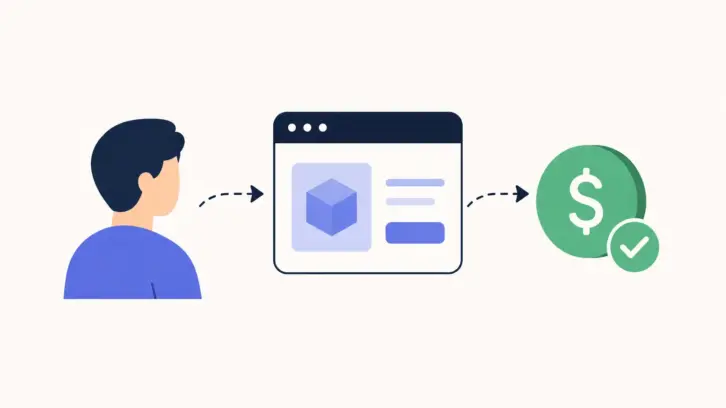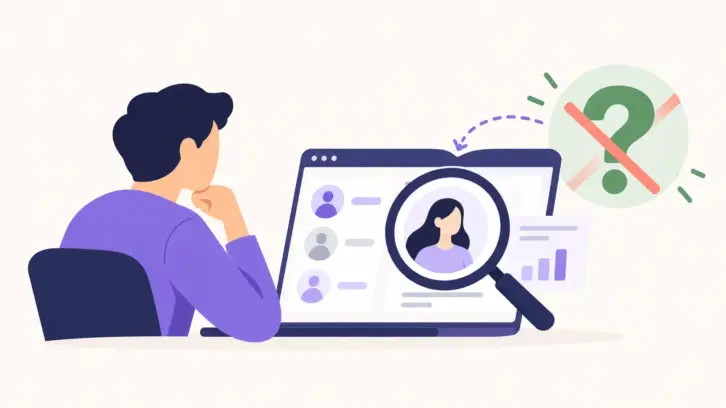




Product testing is the process of evaluating a product with real users or against defined standards before and after launch to confirm it works, meets user needs, and is ready for market. It spans concept testing, usability testing, functional checks, and live market trials. The purpose of product testing is simple: find problems while they are still cheap to fix.
Key takeaways
- Product testing checks whether a product works, is usable, and meets a real need at every stage, from concept to post-launch.
- About one in four new products is no longer bought a year after launch, rising to roughly 40% within two years, according to research published in the journal Marketing Letters.
- The main types are concept testing, usability testing, functional or QA testing, beta testing, and market testing. Most teams combine several.
- A repeatable product testing process has six steps: define the goal, choose a method, recruit the right users, run the test, analyze the results, and act.
- Testing with real users early is the highest-impact step. Trust Bank used UXArmy to make design decisions five times faster while building an award-winning app.
What is Product Testing?
Product testing is the structured evaluation of a product to confirm that it works as intended, solves a real problem, and is ready for the people who will use it. It runs throughout product development and testing, not only at the end. Teams test early concepts, prototypes, and live products, then feed what they learn back into the design.
The term covers two related ideas. The first is technical: does the product function correctly and reliably? The second is human: do real users understand it, value it, and succeed with it? Strong teams treat both as part of the same job rather than separate checkboxes.
Product testing is not a final checkpoint. It is a habit that protects every release. Build it into your process, test with the right users early, and you give your product its best chance to succeed. Starting a free UXArmy trial is a quick way to put real users in front of your next release.
What is the Purpose of Product Testing?
The purpose of product testing is to find problems while they are still cheap to fix. A flaw caught in a prototype costs a small design change. The same flaw, caught after launch, led to lost customers, bad reviews, and expensive rework. Fixing a defect after release can cost many times more than catching it in design, and it arrives alongside refunds, support tickets, and ratings you cannot easily undo.
The stakes are real. One in four new products is no longer bought a year after launch, climbing to roughly 40% within two years, according to a study in the journal Marketing Letters. Most of those failures trace back to a product that did not meet users’ actual needs. Product testing exists to close that gap before it costs you the launch.
The Main Types of Product Testing
Product testing is not a single activity. Different questions call for different methods, and most teams combine several across the testing workflow.
| Type | Question it answers | Best stage |
| Concept testing | Do people want this idea? | Before building |
| Usability testing | Can people actually use it? | Prototype to live |
| Functional / QA testing | Does it work without bugs? | Build to release |
| Beta testing | Does it hold up in the real world? | Pre-launch |
| Market testing | Will people buy it? | Launch |
Concept and usability testing rely heavily on product testing research with real users. Functional testing is more technical and rules-based. Choose by your biggest unknown: test the concept when you are unsure the idea has demand, test usability when the idea is sound but the experience may not be, and run functional and beta testing once the build is close to ready.
The Product Testing Process: Six Steps
A repeatable product testing process keeps testing from becoming ad hoc. These six steps work for most teams:
- Define the goal. Decide the single question this test must answer, written as something a stakeholder cares about, such as whether a new user can finish checkout without help. Vague goals produce vague results.
- Choose the right method. Match each method to its corresponding question using the table above. A user research planning template helps structure the plan before you start.
- Recruit the right users. Test with people who match your target audience, not whoever happens to be nearby. The closer the match, the more you can trust the result.
- Run the test. Keep tasks realistic and let users work without coaching or hints, so you see genuine behavior rather than performance.
- Analyze the results. Look for patterns across users, not one-off opinions. A user research question bank helps sharpen what you ask in the first place.
- Act on the findings. Feed insights back into the design, then test again.
Product Testing Strategies That Work
The best product testing strategies share a few traits. Use these as a checklist:
- Test early and often. Small, frequent tests beat one large test right before launch.
- Mix methods. Pair qualitative product testing research, like watching users, with quantitative signals, like task completion rates.
- Recruit precisely. Insights are only as good as your participants. Recruiting participants who match your target users is the difference between signal and noise.
- Close the loop. A test that does not change a decision was a wasted effort.
- Make it a habit. Build testing into product development and testing cycles so it becomes routine, not a fire drill.
Common Product Testing Mistakes to Avoid
Even experienced teams weaken their own results. Watch for these mistakes:
- Testing too late. Waiting until just before launch means problems are expensive to fix and easy to talk yourself out of addressing.
- Recruiting the wrong people. Feedback from people, unlike your users, points you in the wrong direction with false confidence.
- Leading the user. Hints and loaded questions produce the answers you hoped for instead of the truth.
- Testing everything at once. Cramming many goals into one session muddies which change caused which reaction.
- Filing insights away. A finding that never reaches a decision is research you paid for and then wasted.
How to Test a Product With Real Users
Knowing how to test a product comes down to watching real people attempt real tasks. Surveys tell you what people say. Watching them shows you what they do, which is often very different.
A practical path for how to test a product:
- Start with an early prototype test to catch design problems before you build.
- Run unmoderated usability testing to see where users hesitate, at scale and on their own time.
- Add live interviews when you need the reasoning behind a behavior, not just the behavior itself.
Two formats cover most needs. Unmoderated testing lets many users complete tasks on their own while the session is recorded, which is both fast and scalable. Moderated testing places a researcher in direct contact with the user to probe decisions as they occur, which is slower but richer. Many teams start unmoderated for breadth, then run moderated sessions on the few questions that need depth.
This is where UXArmy fits into product development and testing. The platform records what users do and say, recruits matched participants from a panel spanning more than 20 countries, and turns sessions into short clips your team can act on.
The payoff is concrete. Trust Bank, a digital bank built by Standard Chartered and FairPrice Group in Singapore, used UXArmy to make design decisions five times faster. A lean team of fewer than ten designers ran usability tests across more than 20 features in 18 months, received user feedback in as little as two to three days, and shipped an award-winning app. That is testing working as a routine part of development rather than a gate at the end.
Want to see how real users experience your product? Start a free UXArmy trial and run your first test this week.
FAQs on Product Testing
What is the difference between product testing and QA?
QA, or quality assurance, checks that a product works technically and is free of bugs. Product testing is broader. It also asks whether real users understand the product, value it, and can complete their goals. You need both.
How many users do you need for product testing?
Around five users per round surface most major usability issues, so several small rounds beat one large one. Quantitative questions, such as conversion rates or task success rates, require larger sample sizes to be reliable.
When should product testing start?
As early as the concept or prototype stage, long before launch. Testing a rough prototype is the cheapest way to catch a flawed idea and prevent costly rebuilds later in development.
What is the difference between alpha and beta testing?
Alpha testing happens internally, usually with your own team, to catch obvious issues. Beta testing puts the product in front of real external users in real conditions before the full launch. Each catches problems the other misses.
How much does product testing cost?
It varies widely. Unmoderated remote usability testing is the most affordable and can run for little more than participant incentives plus a platform subscription. Moderated sessions and large quantitative studies cost more because they take more time and people. Starting small keeps early testing cheap.