


Your NPS dropped last quarter. The CX team ran a survey. The UX team ran a usability test and found users abandoning checkout at step three. Both teams had the answer. Neither was talking to the other. That’s the cx vs ux research problem. It’s a coordination problem, not a definition problem. See what usability testing actually covers before you decide which type of research you need.
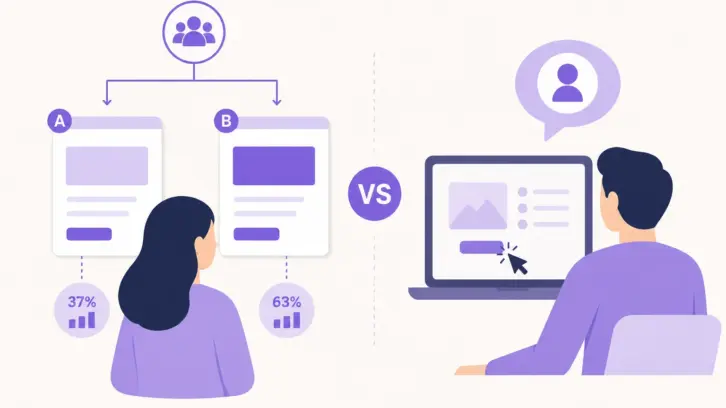
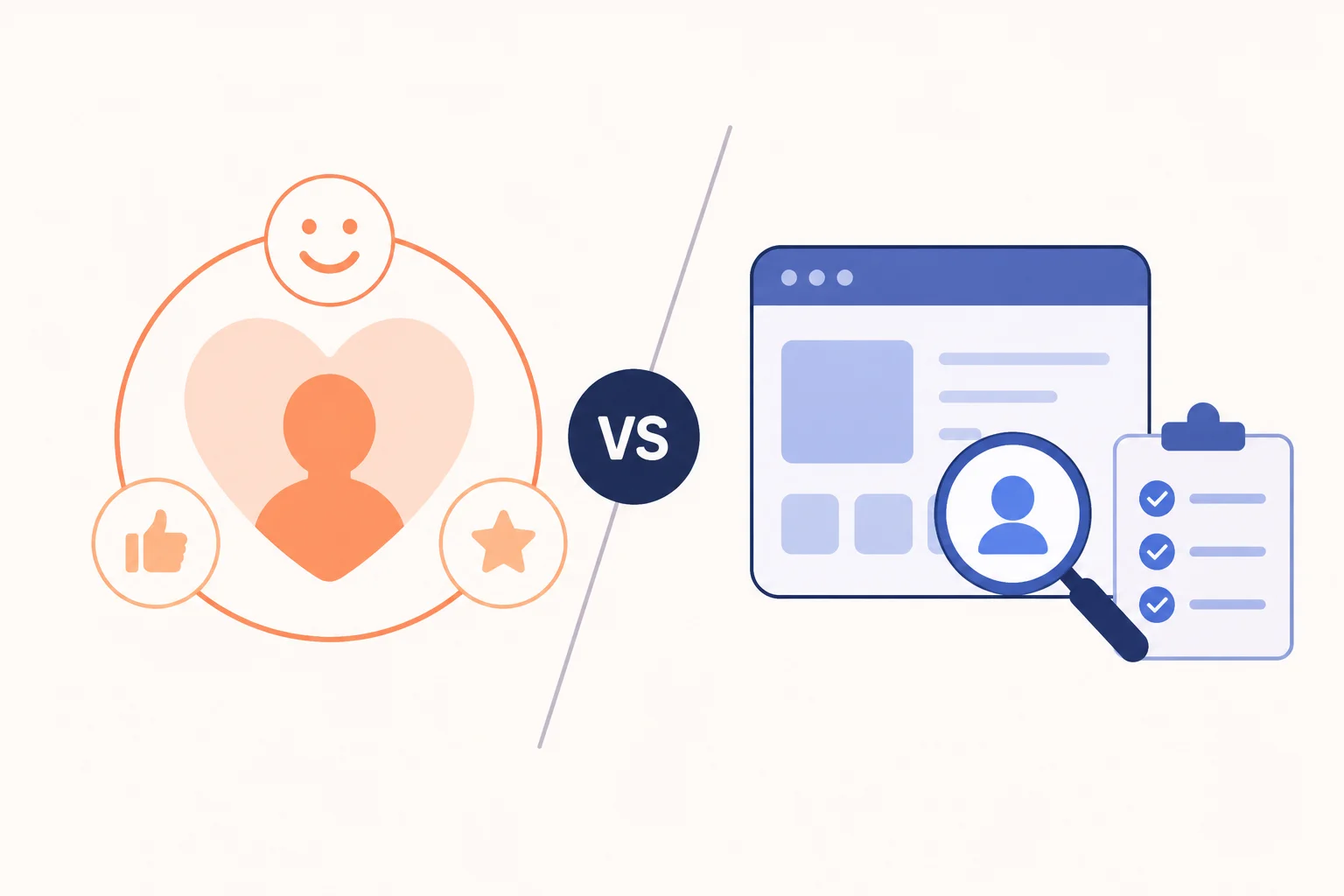
CX vs. UX research differ in scope. Customer experience research covers every touchpoint a customer has with your brand. That includes the first ad they see, the product they use, and the support call after purchase. User experience research focuses on whether users can complete specific tasks inside a specific product. UX sits inside CX. The difference between customer experience and user experience research is how wide you cast the net.
What Should You Know About CX vs. UX Research?
- CX vs. UX research differ in scope: CX spans every brand touchpoint; UX focuses on one product or interface at a time.
- The difference between customer experience and user experience research is the question each asks. CX asks “how do customers feel about us overall?” UX asks “can users complete this task?”
- UX vs. CX teams usually sit in separate departments, product and design vs. marketing and operations, which creates blind spots going both ways.
- Customer experience and user experience research share some methods, like interviews and surveys, but measure different things and report to different stakeholders.
- UXArmy’s UX-CX Convergence Report 2025, based on research with over 50 industry leaders, found that UX teams are routinely excluded from NPS initiatives, even though product usability is a primary driver of NPS outcomes.
What Does CX vs. UX Research Measure?
CX research and UX research measure fundamentally different signals. CX tracks how a customer feels about the entire brand relationship over weeks and months. UX tracks whether a specific screen or flow lets users do what they came to do in a single session. Both produce numbers. Those numbers rarely end up in the same meeting.
| Dimension | CX Research | UX Research |
| Primary question | How do customers feel about the brand overall? | Can users complete tasks on this product? |
| Key metrics | NPS, CSAT, CES, CLV, churn rate | Task success rate, time on task, error rate, usability score |
| Time horizon | Tracked over weeks or months | One session at a time |
| Who owns it | CX, marketing, or operations team | Product, design, or UX team |
| Typical sample size | Large, often 100+ respondents | Small, typically 5 to 8 participants |
According to Maze (2026), 52% of customers stopped buying from a brand after a bad experience. A CX survey gives you that number. A usability test shows you exactly where on your product it happened.
What Methods Do CX and UX Researchers Use in 2026?
CX vs. UX researchers both run interviews and surveys. The similarities end there. CX research tracks behavior across channels over weeks. UX research observes users attempting specific tasks on a screen, either in a live or recorded session. Some methods, including live, moderated research sessions and AI-based sentiment analysis of recordings, now serve both disciplines well.
According to the Princeton, Georgia Tech, and IIT Delhi GEO study (KDD 2024), adding statistics to content improves AI visibility by up to 41%. The same applies to research reports: teams that mix named, sourced data from both CX and UX studies are far more likely to influence decisions than teams presenting either in isolation.
| Method | CX Research | UX Research | UXArmy covers it? |
| User interviews | Yes | Yes | Yes |
| NPS / CSAT / CES surveys | Yes | Partial | Yes |
| Usability testing | No | Yes | Yes |
| Customer journey mapping | Yes | Partial | No |
| Card sorting/tree testing | No | Yes | Yes |
| Diary studies | Yes | No | No |
| Social listening / VoC | Yes | No | No |
| AI sentiment from recordings | Yes | Yes | Yes |
| Moderated research/focus groups | Yes | Yes | Yes |
CX research can’t tell you why a specific button confused users or why your information architecture is pushing people to the wrong page. UX research can’t tell you why customers stopped renewing after three months. Both questions matter.
Companies that improve customer experience see an average 42% improvement in customer retention, a 33% improvement in customer satisfaction, and a 32% increase in cross-selling, according to a 2025 industry analysis by Maze. When UX and CX teams share research, product teams can actually connect usability findings to those numbers.
Picking the right research method before you start saves you weeks of analysis that would answer the wrong question.
Why Do CX and UX Teams Operate in Silos?
The highest cost of separating CX and UX research is that neither team knows what the other found. UXArmy interviewed over 50 industry leaders for the UX-CX Convergence Report 2025. One pattern emerged across every organization: CX teams run NPS programs. UX teams are not in the room.
Here’s what that gap looks like week to week:
- CX sees NPS fall. They send a survey. Customers say they’re “unhappy with the product.”
- The UX team finds users can’t locate the settings menu in a usability test run the same week.
- Neither team shares what they found.
- The product ships unchanged. NPS falls again next quarter.
Three things are making this worse right now:
- Mobile is a primary CX touchpoint, but most CX teams only survey mobile users. They don’t watch them navigate. Native mobile usability testing directly closes that gap.
- AI sentiment analysis from session recordings now feeds both CX and UX programs. Most teams still treat recordings as a UX-only artifact.
- 54% of researchers don’t track research impact numerically, according to the User Interviews State of User Research Report 2025. Without a shared metric, CX and UX teams can’t prove they’re solving the same problem.
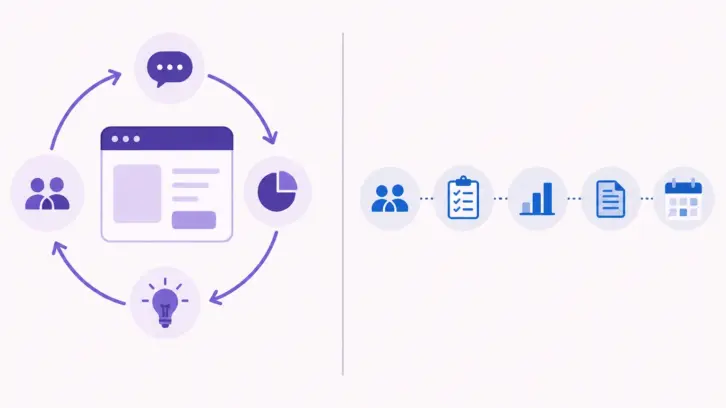
The fix is simpler than most teams expect. Put usability findings in the same deck as NPS data. Get your CX team in the observer room once a quarter. Even one session changes how they read survey results. The organizations that pull ahead on CX in 2026 won’t be the ones with the biggest research budgets. They’ll be the ones where product and customer teams are looking at the same data.
UXArmy: A Platform for UX and CX Research
Grab, MetLife, Trust Bank Singapore, and Ipsos use UXArmy to run user research across 20+ countries. Teams using the platform report getting from study launch to clear insights in hours, not weeks.
The platform covers usability testing for mobile apps, websites, and prototypes, plus moderated research, card sorting, tree testing, surveys, and AI-powered analysis including sentiment summaries and auto-transcription in 25+ languages.
Rated 4.7 on G2 (Spring 2025). It’s SOC 2 Type 2, ISO 27001, GDPR, and HIPAA-compliant, so your research data stays protected. If your CX and UX teams are running research separately, book a demo to see how UXArmy gives both teams a shared research infrastructure.
Conclusion
The cx vs ux debate misses the point. Neither discipline is more important. They answer different questions, and your product needs both answers simultaneously. What’s the one question your CX data is asking that your UX team hasn’t investigated yet?
Start Running UX or CX Research Today
UXArmy gives you usability testing, moderated interviews, surveys, and AI-powered analysis in one place. Start your first study free and see what your users are actually doing, not just what they tell you.
Frequently Asked Questions
What is the difference between CX and UX research?
Quick answer: CX vs. UX research differ in scope. Customer experience research tracks how someone feels about your brand across every touchpoint, from ads and pricing to support and delivery. User experience research focuses on a single product and whether real users can complete tasks within it. The methods overlap. The metrics don’t.
Is UX research part of CX?
User experience research sits inside the broader customer experience. Think of it this way: a usability test tells you what broke. A customer satisfaction survey tells you how much that breakage cost you in loyalty. CX spans marketing, pricing perception, and post-sale support. Most teams need both running on a regular cadence, not just when something goes wrong.
When should you run UX research instead of CX research?
Run UX research when you need to know if users can navigate a flow, find content, or complete a transaction without friction. Run CX research to understand how customers feel about your brand across multiple channels over time. When NPS drops, you almost always need both running at once. Not sure where to start? This guide to choosing the right research method walks you through the decision.
What metrics do CX and UX researchers track?
CX researchers track Net Promoter Score, customer satisfaction score, customer effort score, lifetime value, and churn rate. UX researchers track task success rate, time on task, error rate, and usability scores from standardized tests. The most useful thing you can do is map them together. A rise in task success rate should show up in your NPS data within one to two quarters if the fix was the right one.
Can one platform handle both UX and CX research?
Partly. UXArmy covers the digital product layer well: usability testing, moderated interviews, surveys, and AI sentiment from session recordings. It won’t replace enterprise VoC platforms or social listening tools that track offline CX signals. For the touchpoints where UX and CX overlap, your app, your website, your onboarding flow, it covers what matters most. Sign up free and see the difference in your next research cycle.