UXArmy MCP server with Claude for Usability Testing: Can Claude Run a Study End to End?
I gave Claude a study plan and a UXArmy account. Here's how far it got, from notes to a live study to a CEO slide, and where I still had to step in.
Get expert insights on UX research and testing strategies for improved UX outcomes.
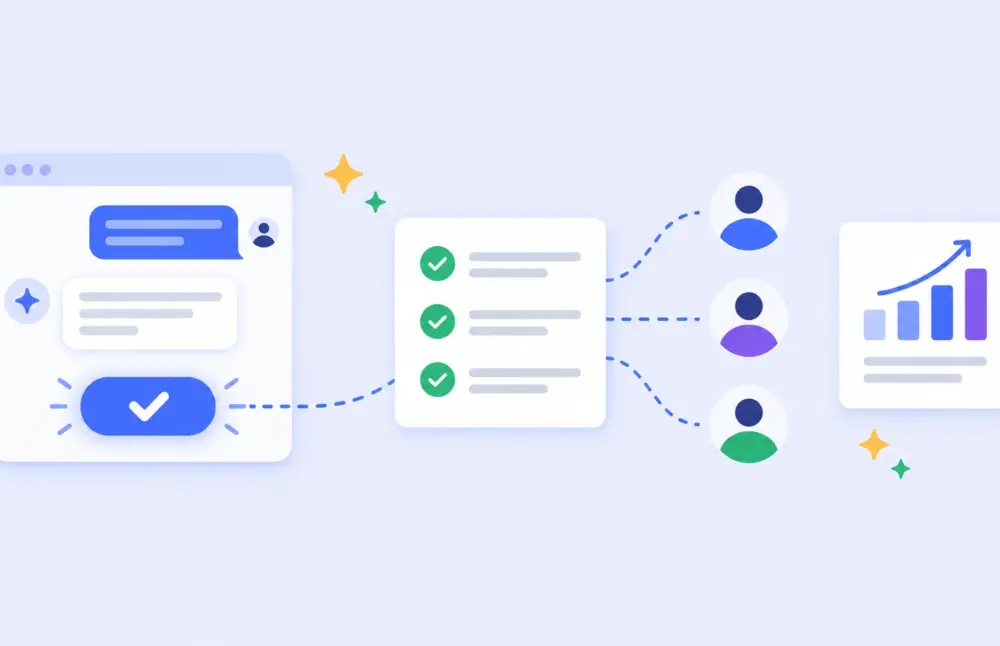
I gave Claude a study plan and a UXArmy account. Here's how far it got, from notes to a live study to a CEO slide, and where I still had to step in.

UXArmy fam, feast your eyes on this! The all-in-one user research platform we all know and love reigns supremely in G2’s Summer 2024 Reports.
Read More
From the lens of people outside of the UX field, the UX Researcher role can be conceptualized and interpreted in many different ways.
Read More
The "5-user rule" for usability testing is widely quoted but has important caveats. Sample size depends on study goals, methodology, and the need for iterative testing.
Read More
Building a solid brand unquestionably requires a sound UI/UX design and research ground to establish both credibility and appeal.
Read More
Usability testing is a vital step in ensuring a seamless user experience for your digital products. To streamline your usability test planning process
Read More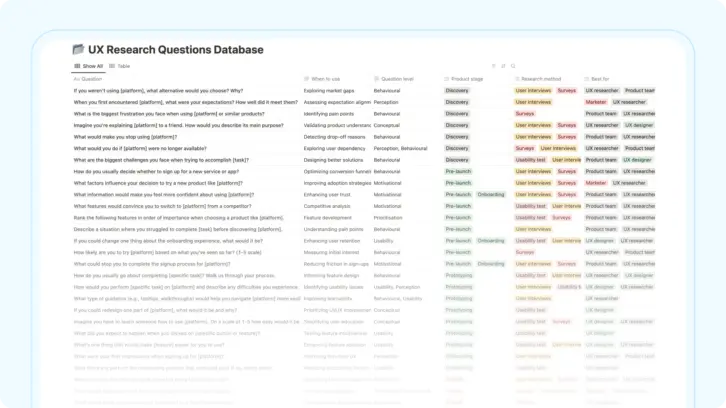
As a UX researcher or practitioner, you know that asking the right questions is essential for gaining valuable insights into user experience.
Read More
Landing pages succeed or fail in seconds. Learn the psychology of first impressions, device and speed considerations, role-specific playbooks, AI-assisted workflows, pitfalls to avoid, and credible examples - so your pages convert.
Read More
Running the unmoderated usability test was the easy part. This guide covers the harder one: deciding what the result means, when it justifies a design change, and how to defend that decision to your stakeholders.
Read More
As a User researcher, perhaps you have run a dozen over user research projects, or maybe even hundreds.
Read More
User research is a continuous process with no time being the wrong time to do one. That opens several questions in the minds of researchers, especially when they are new to the field.
Read More
To build some context, Usability testing is an evaluative user research that enables the key stakeholders and project team to understand how people interact with a product.
Read More
As a refresher, cheatsheets address a need to make a quick reference and reinforce your understanding about a topic.
Read More
A common term used across market research and user research, Concept testing can be confusing for people new to UX.
Read More
Although usability testing has existed for a couple of decades, many product development teams still do not apply it in practice.
Read More
From the very beginning the Insurance Industry has been an agent-centric industry, that means that it has heavily relied on human agents to handle the Sales.
Read More
When we think of a futuristic reality for the human race, we think of flying cars and holographic calls. We may not be there just yet but we are sure on our way to building a digital future for all.
Read More
Qualitative data analysis is an art that requires skilled synthesis by UX researchers. UXArmy DeepDive streamlines this process with collaboration, filtering, and sorting tools.
Read More
Note-taking is essential in usability research to capture participant experiences and uncover hidden insights. You can use pen and paper, a computer, or remote research tools like DeepDive.
Read More
User interviews help product teams understand users’ needs, behaviors, and motivators. This guide shows how to prepare questions, recruit participants, conduct interviews, and turn findings into actionable decisions with examples.
Read More
In this interview, UX researcher Shiyun Lim (SP Digital, Singapore) shares her experience, methods, and insights into user research, including how she runs remote sessions and collaborates with teams.
Read More
Design Thinking’s hype may have faded, but its value remains. This guide explores its critiques, lasting strengths, and modern approaches like Continuous Discovery, AI-assisted research, and Design/ResearchOps to keep teams human-centered and effective.
Read More
The following are descriptions of some terms commonly used in UX. Each term consists of its definition and some sources, which are fully credited.
Read More
UX research is under pressure-from AI, speed-at-all-costs cultures, and shrinking teams. This piece separates threat from noise, shows where human insight still wins, and lays out a practical action plan to stay indispensable. If you guide decisions with empathy and evidence, the future is very much yours.
Read More
Discover what matters most to your customers! Creating compelling user experiences starts with knowing what your customers value.
Read More

Fill in some details to start the conversation
We and our partners use cookies and similar technologies to improve your experience, analyze site traffic, and deliver personalized content. Non-essential cookies are only set after you give consent. You can change your preferences at any time.
Cookie PolicyWe and our partners use cookies and similar tracking technologies on this site. Strictly Necessary cookies are always active as they are required for the site to work. For all other categories, we require your explicit consent before any cookies are set. You may withdraw or change your consent at any time by clicking "Manage Cookies" in the site footer. For details on what data is collected and how it is used, see our Cookie Policy.
These cookies are essential for the website to function. They include session authentication, security tokens, load balancing, and user preference storage. The site cannot operate properly without them and they cannot be disabled. They do not collect personally identifiable information.
These cookies enable enhanced functionality such as contact forms, embedded video players, live chat widgets, and language preferences. Without them, some features may not work correctly. They may be set by us or by third-party providers whose services are integrated into our site.
These cookies help us understand how visitors interact with our website. We use Google Analytics 4 (via Google Tag Manager) to measure pageviews, session duration, traffic sources, and user journeys. All data is aggregated and pseudonymised — no individual user is identifiable. This data is used solely to improve site performance and content.
These cookies are used to deliver advertisements relevant to you and your interests, and to measure the effectiveness of ad campaigns. They are set through our site by advertising partners via Google Tag Manager. These partners may combine this information with other data they have collected from your use of their services. Under CCPA/CPRA, this may constitute a "sale or sharing" of your personal information.
California residents: you have the right to opt out of the sale or sharing of your personal information. Do Not Sell or Share My Personal Information.